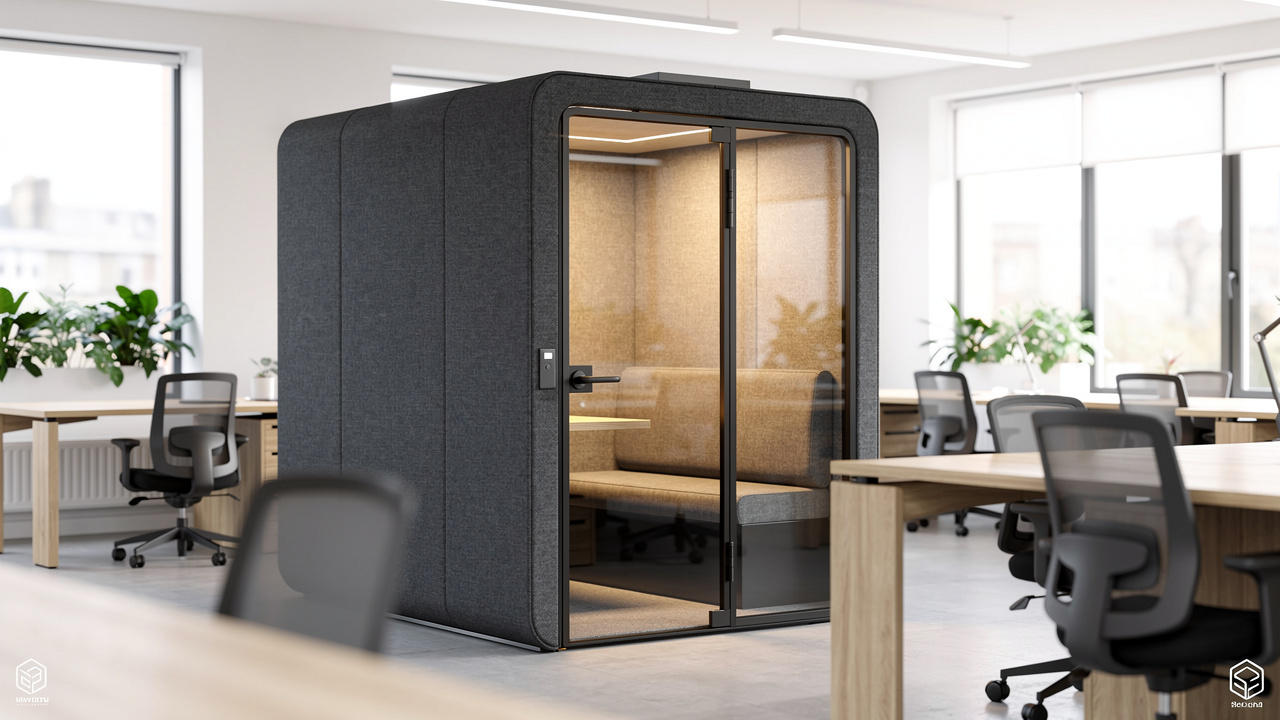
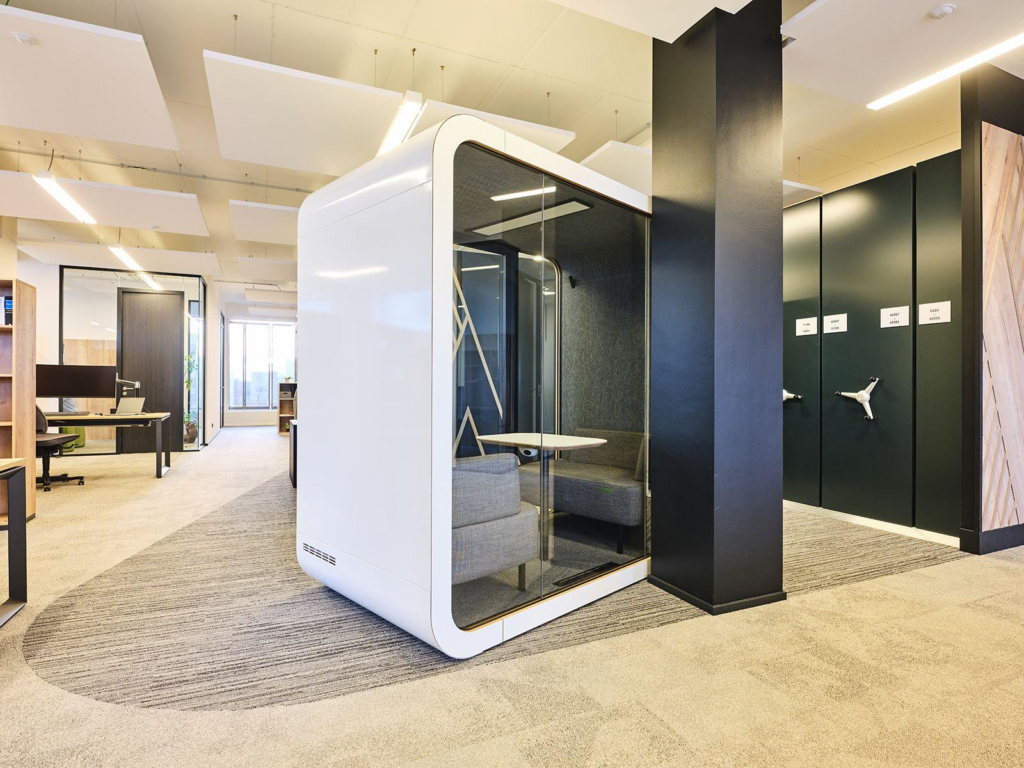
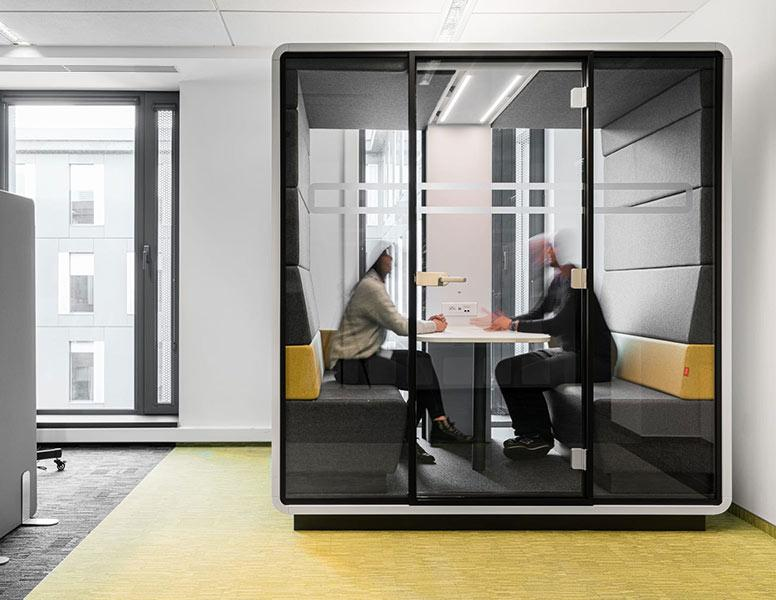
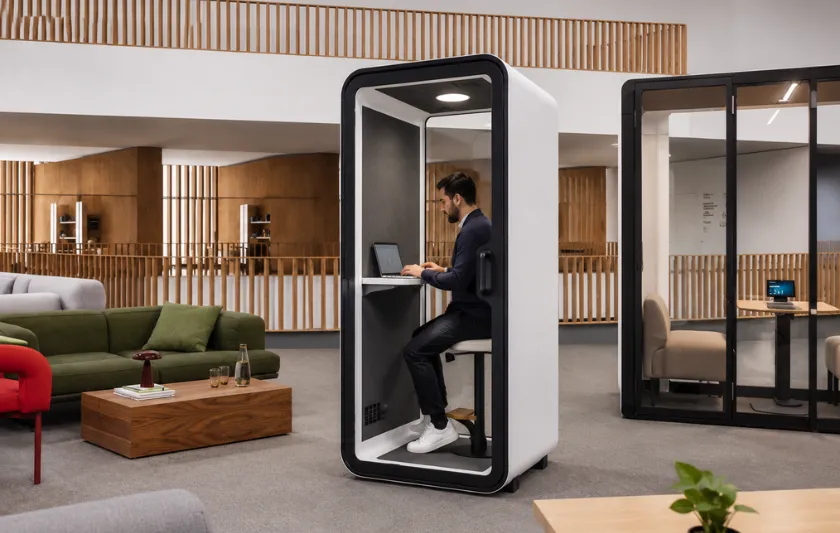
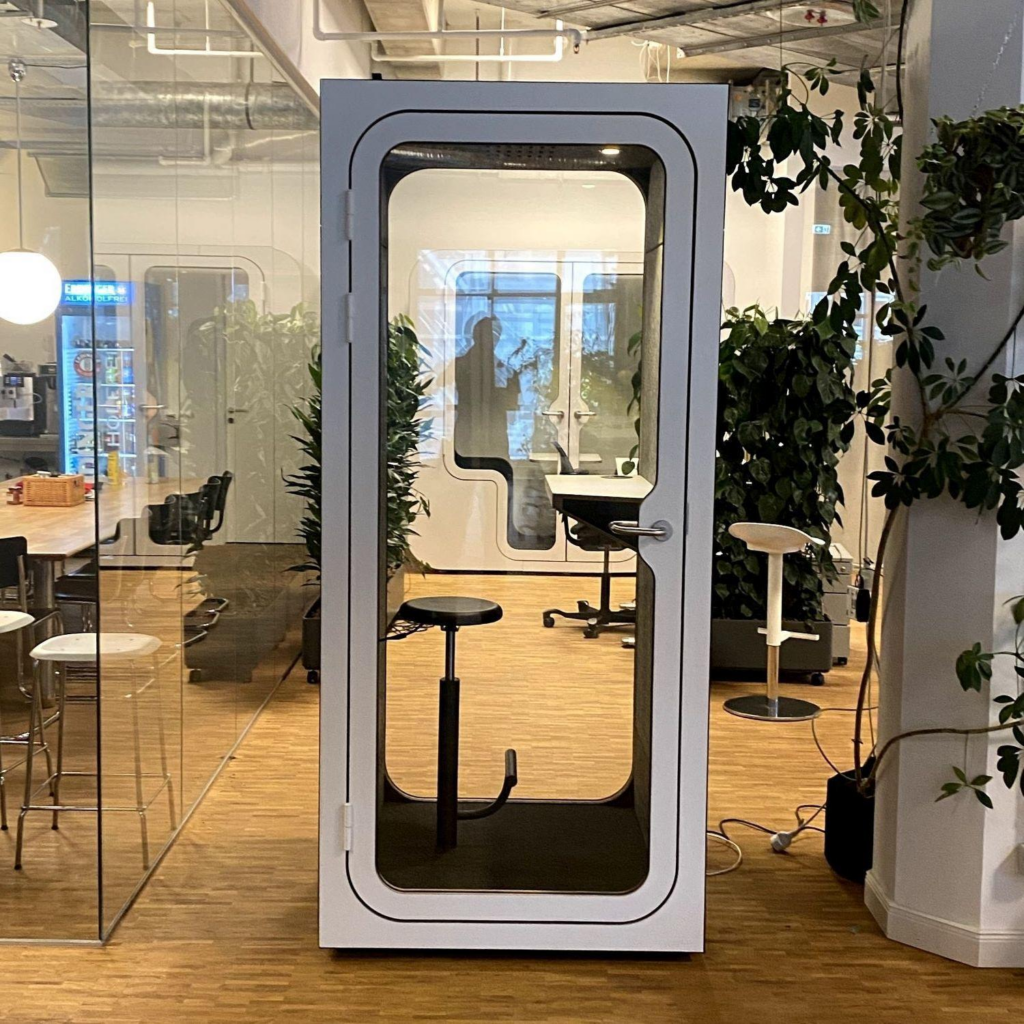
Hybrid schedules have exposed how little privacy many UK offices really offer. Staff arrive on their in‑office days needing quiet space for calls, focus work, and fast stand‑ups, yet find only noisy open desks. The best office pods in the UK for modern hybrid workplaces solve this gap by adding acoustic, moveable rooms inside existing floors without traditional building work. This article explains what those pods are, what makes one “best in class,” and which models lead the UK market right now.
We will look at pod types, compare leading products, and highlight must‑have features for hybrid teams. Along the way, DE Sound PODS will appear as a key UK manufacturer with acoustic ratings, smart features, and proven quality control. By the end, facilities managers, architects, and procurement teams will have a clear, practical checklist to choose the right pods for their own spaces.
Key Takeaways
Acoustic performance comes first. Check each pod’s dB rating and class so private calls stay private while nearby teams are not disturbed. A clear figure, such as 32 dB Class B, gives a firm benchmark when you compare different models.
The lead option in this guide is DE Sound PODS, which matches 32 dB Class B insulation with full finish and furniture choice. That mix lets UK hybrid offices align pods with brand colors, flooring schemes, and layout while still hitting strict noise goals.
Pods now cover nearly every use case, from single phone booths to 8 person meeting suites with screens. Smart details such as photoelectric lighting, quiet fans, and USB‑A or USB‑C power help staff actually use the pods every day rather than return to noisy desks.
“Office pods are one of the simplest ways to cut noise and boost focus without rebuilding your entire floor plate.” — Leesman Workplace Survey Commentary
What Are Office Pods And Why Do UK Hybrid Offices Need Them?
Office pods are enclosed, often modular rooms that sit inside existing offices and create quiet, private space without permanent walls. Most combine acoustic glass, dense wall panels, and sealed doors to cut noise from the wider floor while limiting sound escaping from inside. They arrive as flat‑pack kits or prebuilt units from manufacturers such as Framery, Hushoffice, and AgileAcoustics, then bolt together in hours.
Hybrid working patterns across the UK make these pods essential, with research on remote work and firm productivity finding that the benefits of flexible work arrangements vary widely depending on firm structure and job type. Staff at companies in London, Manchester, and Bristol now split their time across home, client sites, and shared hubs like WeWork. When they come into an office owned by a bank such as HSBC or a tech firm like Microsoft, they expect to find spaces suited to long video calls, confidential chats, and deep focus, not just rows of open desks.
Pods solve this by adding small, flexible rooms where they are needed most. For example:
A single phone booth beside open benches might handle one‑to‑one Teams calls.
A two‑person pod near a project zone can support paired work or coaching sessions.
A four seat meeting pod beside a project area might host hybrid sprint reviews with colleagues working from home.
Because pods are classed as furniture, they avoid long planning timelines and disruptive construction work. This makes them practical for tenants on shorter leases who still need quieter, more private space for staff on office days.
How Do Office Pods Solve Common Open-Plan Office Problems?
Office pods tackle the three biggest complaints about open‑plan layouts, which are noise, lack of privacy, and constant interruption.
They do this by:
Enclosing the user in an acoustic shell, cutting down background chatter from sales floors, shared hubs, or breakout areas managed by operators like Regus.
Limiting the user’s own calls so they do not spill across the room, which reduces distraction for surrounding teams.
Offering a door and defined boundary, which signals “do not disturb” far more clearly than wearing headphones
They also sidestep the high cost of extra meeting rooms. Instead of hiring contractors to build new stud walls, run extra cabling, and re‑route fire services, facilities teams can place pods from suppliers such as Torus or Campers & Dens exactly where they are needed. Pods help staff who are sensitive to noise, including many neurodivergent colleagues, by giving them a controllable space with steady light and airflow, echoing findings on how the addition of soundproof pods influenced office employees’ experience and wellbeing. That mix supports both wellbeing and consistent performance on busy office days.
“Noise is the number one complaint in open offices, yet it’s also the easiest one to fix with the right acoustic strategy.” — Nigel Oseland, Workplace Psychologist
Best Office Pods In The UK For Hybrid Workplaces
The best office pods in the UK for modern hybrid workplaces combine solid acoustic ratings, reliable ventilation, and layouts that fit real tasks. For a fair view, this section highlights leading products across several categories, from solo phone booths to larger team pods. Each option suits different sectors, including corporate offices, universities, hospitals, and coworking spaces.
When reviewing options, many UK buyers compare well known pod makers such as Framery in Finland, Hush Hybrid from Mikomax in Poland, and modular systems like Torus from AgileAcoustics. Alongside these, domestic suppliers now provide UK‑built pods that cut transport miles and support local manufacturing. The models below reflect that mix so facilities managers at companies from the BBC to the NHS can align choices with their own priorities.
DE Sound PODS Best For Customizable, Acoustic-Rated Privacy Pods
DE Sound PODS sits at the acoustic privacy end of the market, with pods rated at 32 dB Class B sound insulation. In practice, that level means staff can hold sensitive HR meetings or client calls inside the pod while nearby colleagues at shared benches hear only a soft murmur. It suits open floors in sectors such as financial services, legal firms, and university admin hubs where confidentiality is non‑negotiable.
The range focuses on full visual and functional customization rather than one standard look. Clients choose exterior panels, interior fabrics, worktops, and seating styles so pods blend with existing schemes created by design studios such as Gensler or BDG. Inside, photoelectric lighting switches on automatically when someone enters and maintains even, comfortable light for video calls on Zoom or Microsoft Teams. Quiet, continuous ventilation feeds fresh air during long sessions, while integrated USB‑A and USB‑C power keeps laptops and phones charged.
Configurations run from compact single phone booths up to larger meeting pods sized for group work and workshops. That modular approach lets a coworking operator add a small cluster to a London site, then roll out matching units across regional hubs. A 100 percent quality‑inspection process before delivery, similar to the data-driven inspection scheme with decision support systems shown to improve lot acceptance and supplier compliance in manufacturing research, supports bulk orders for corporate campuses, hospitals, and education estates that cannot afford uneven build quality across dozens of locations.
Tip: When you test‑sit any pod, make a real call on your usual platform and walk around outside listening. That quick check reveals more about acoustic performance than any brochure figure.
Framery One Best For Premium Video-Call Acoustics
Framery One is a high‑end single user pod built around video calls and hybrid meetings. It holds one of the top ratings under the ISO 23351‑1 standard for pod sound insulation, so staff in a busy office in Canary Wharf can talk freely without disturbing nearby desks. The unit’s mechanical ventilation provides around 29 liters of fresh air per second, which many office designers note is more than four times common guideline rates for workspace airflow.
This pod suits companies where staff spend much of the day on calls with teams in New York, Berlin, or Singapore. Combined with Framery’s smart software plans, facilities teams gain usage data and booking control across multiple locations, helping them fine‑tune how many pods to deploy and where to place them on each floor.
Hush Hybrid Best For Remote-First Video Conferencing
Hush Hybrid focuses on staff who spend long periods in online meetings. Inside the pod, integrated seating supports an upright but comfortable posture suited to video calls on platforms such as Zoom or Google Meet. Side‑mounted LED facial lighting brightens the user’s face evenly, helping them appear professional on screen even in offices with low natural light.
An adjustable desktop and monitor bracket make it easy to set up an all‑in‑one computer or large screen. Certified acoustic panels balance speech clarity inside the pod while keeping sound contained, which is helpful in shared hubs or serviced offices. For remote‑first organizations, this type of pod gives office‑based staff a quiet bridge into distributed team calls.
Torus L / XL / XXL Best For Scalable Group Meetings
The Torus system from AgileAcoustics offers meeting pods that grow as team size changes. Torus L seats up to 4 people and suits small project huddles or interviews. Two linked units form Torus XL, while 3 in a row create Torus XXL, which can hold around 8 people for workshops or board meetings.
These pods work well for companies that want an extra meeting room without permanent walls. They can serve as quiet collaboration areas in coworking spaces, consultation rooms in private clinics, or breakout suites for training centers run by universities and colleges. Because units can be added over time, organizations can start small and expand as headcount or meeting demand increases.
Z Duo And AgilePOD Best For Niche Use Cases
Z Duo is a compact two person pod designed for shared video calls or paired work. It lets two colleagues join the same webinar together without fighting for a meeting room. Many models offer an integral screen and LED strips beside the display, which helps teams look clear on camera during joint presentations to clients in places like Paris or Dubai.
AgilePOD systems from AgileAcoustics focus on modularity and light. Units often include ceiling windows that pull in natural daylight, PIR‑controlled LED lighting that switches off between sessions, and fans with adjustable speed to manage CO2 levels. Bigger AgilePOD layouts can include side canopies or Vista‑style fascias, which match other partitions on a floor and give designers more options when zoning large spaces. This makes them a good fit for creative studios and innovation labs where visual character matters alongside performance.
What Features Matter Most When Choosing An Office Pod?
Choosing among the best office pods in the UK for modern hybrid workplaces means checking more than just price and size. The right pod needs to sound quiet, feel fresh, and work for both staff and facilities teams across years of use. Several technical details make the difference between a pod that staff love and one that sits empty.
Acoustics, ventilation, lighting, and technology integration all connect back to real hybrid tasks such as long Teams calls, quiet focus work, or short stand‑ups. Branding, modular layouts, and access features help pods blend into projects led by architects at firms such as BDP or Allies and Morrison. The points below highlight the main features procurement teams should check before signing a contract.
Acoustic Insulation And Certified Sound Ratings
Acoustic insulation decides whether a pod actually solves noise problems. Ratings such as “32 dB Class B” describe how much sound the walls and glass reduce compared with open air. In basic terms, a higher dB number means quieter space inside and less leakage outside, useful for HR talks or clinical calls in NHS offices.
Standards such as ISO 23351‑1 give a shared way to compare pods from different manufacturers. Pods should still let users hear fire alarms and safety messages from the base building, so complete silence is not the goal. The aim is enough reduction that speech becomes a blur outside the pod while remaining clear inside.
When reviewing acoustic performance, consider:
The stated tested standard and whether it is independently verified.
How the pod behaves in real use, not just in lab conditions.
Whether the door closes smoothly and seals fully around the frame.
The quality of acoustic glass and panel construction.
Ventilation, Lighting And Smart Comfort Features
Comfort decides whether staff book a pod again after the first try, and an activity-based model of hybrid workspace design confirms that matching physical space features to specific work activities strongly predicts employee satisfaction and reuse. Mechanical ventilation should run whenever the pod is occupied so air does not grow stale during a 90‑minute planning session. Some systems, like those used in Framery One, provide airflow levels far above typical office targets, which helps reduce fatigue.
Lighting also matters. Photoelectric or PIR sensors turn LEDs on when someone steps inside and off when they leave, cutting wasted energy. Adjustable brightness and well placed light panels support clear video images on laptops and conference cameras without harsh glare. Built‑in power sockets and USB‑A or USB‑C ports keep devices charged without trailing leads back to the main desk.
For hybrid teams, it is also worth checking:
Fan noise levels, so airflow does not create a constant hum on microphone.
Heat build‑up during long meetings, especially in warmer months.
How easily staff can adjust airflow or lighting without calling facilities.
Customization, Modularity And Accessibility
Visual fit and layout flexibility carry real weight in projects managed by designers and contractors. Custom exterior panels, interior fabrics, and bench styles help pods sit comfortably beside furniture from brands such as Herman Miller, Steelcase, or Senator. Modular ranges let clients start with a cluster of phone booths, then add larger meeting pods over time without replacing the originals.
Accessibility must not be an afterthought. Clear door openings, level thresholds, and internal turning circles of around 1500 mm help wheelchair users move safely inside. Controls for lights and fans should sit at a height that works for both seated and standing users, supporting equality commitments for large employers and public bodies.
A quick checklist for layout and accessibility:
Can a wheelchair user enter, turn, and exit without difficulty?
Is there space for assistance if needed, especially in larger pods?
Are handles, switches, and displays easy to reach and use?
Does glazing give enough visibility for safety without harming privacy?
Sustainability And UK Manufacturing
Sustainability is a growing filter in tenders across local councils, universities such as the University of Leeds, and healthcare trusts. Pods built in the UK generally carry a lower transport footprint than imports shipped from North America or Asia. Membership badges such as “Made in Britain” give procurement teams extra confidence that a pod supports local industry and shorter supply chains.
Material choices also matter. Low‑VOC finishes, recycled fabrics, and energy‑efficient fans and lighting all support corporate ESG reports. When pods replace permanent construction, they reduce waste if an office later moves or shrinks, since units can be reused in another site rather than demolished.
“Design for disassembly is becoming standard. Furniture and pods that move with you are kinder to both budgets and the environment.” — UKGBC Circular Economy Guidance
How Do You Choose The Right Office Pod Supplier?
Selecting a supplier for the best office pods in the UK for modern hybrid workplaces calls for more than a glossy brochure. Facilities managers, architects, and procurement teams must balance acoustic performance, visual fit, support levels, and budget. The right partner makes rollout across multiple sites smoother, from a headquarters in London to satellite offices in Glasgow and Cardiff.
A structured comparison across several bidders helps avoid surprises later. Buyers often request real acoustic tests, ventilation data, and references from similar clients in sectors such as education, healthcare, and hospitality. Clear information on lead times, installation processes, and service response is also key when pods sit at the heart of day‑to‑day work.
Key Questions To Ask Before You Buy
Acoustic performance and testing. Ask how the pod has been measured and what independent standard applies. Request real‑world figures rather than only marketing ranges so you can compare brands such as Framery, Hush Hybrid, and Torus on the same basis. Check whether the supplier can provide a live demo pod in one office so staff can listen and give feedback.
Customization and layout options. Check which finishes, fabrics, and glass types are available as standard choices and which count as special orders. Confirm whether pods can be linked into larger rooms later or moved to another floor if the office changes shape. For design‑led projects, see whether the supplier can share CAD files or BIM models for use in tools like Revit.
Quality control and service. Ask how each pod is inspected before it leaves the factory, especially for bulk orders across dozens of schools or clinics, since research on simulation-optimization models for inbound quality inspections in retail supply chains shows structured inspection processes materially reduce defect rates reaching end users. Clarify who installs the pods, how long typical installs take, and what happens if parts arrive damaged. Review the length and coverage of warranties so long‑term maintenance is clear from the start.
Procurement flexibility and support. Explore whether the supplier offers direct purchase, lease, or short‑term rental options. Confirm how quickly spare parts such as fans, power modules, or seals can be supplied. Make sure there is a named contact for after‑sales support rather than only a generic inbox.
Tip: Treat your first order as a pilot. Roll out a small number of pods, measure usage and staff feedback for three to six months, then adjust your specification before a bigger deployment.
Rental Vs Purchase Which Model Fits Your Business
Rental and lease options suit organizations that are still testing hybrid patterns or expect near‑term change. Short terms, sometimes around 3 months, let coworking operators, scale‑ups, or project teams in serviced offices try pods without tying up capital. When needs shift or a lease ends, pods can return to the supplier without storage headaches.
Outright purchase makes more sense for long‑term, high‑use environments such as corporate headquarters, universities, or hospitals. The initial spend spreads across years of daily use, and the organization keeps full control over relocation between floors or sites. Many buyers mix both approaches, renting extra pods for a refit phase, then investing in a stable core fleet once usage patterns are clear.
A simple way to compare models is to map:
Expected length of stay in the building.
Anticipated changes in headcount or team structure.
Access to capital budget versus operational budget.
Appetite for experimenting with different pod types and layouts.
The Takeaway
Hybrid working has turned acoustic pods from a nice extra into basic workplace infrastructure. The best office pods in the UK for modern hybrid workplaces balance solid sound insulation, reliable ventilation, clear lighting, and embedded power so staff can work in comfort. When these elements line up, pods reduce noise, protect privacy, and support both focused work and mixed‑mode meetings.
Buyers should map their main use cases, from phone calls to 8 seat meetings, then match pod types and sizes accordingly. Acoustic ratings, customization choices, accessibility, and UK manufacturing all play into long‑term value across sectors ranging from finance to higher education. For organizations that want high acoustic ratings with full visual flexibility, DE Sound PODS offers a focused, inspected pod range built for exactly these hybrid needs. The next step is to review floor plans, define privacy gaps, and speak with suppliers about a pod mix that fits each site.
Frequently Asked Questions
Question: How much do office pods cost in the UK? Answer: Office pod prices in the UK vary widely, from entry level phone booths through to premium multi person suites. A single booth can cost less than building a new meeting room, while larger pods rival the spend on a full fit‑out. Over time, many buyers find pods cheaper because they can move units between floors or sites instead of rebuilding walls.
Question: Are office pods soundproof? Answer: Office pods are highly sound reducing rather than fully soundproof, for safety reasons. Good pods use acoustic glass and dense panels to cut speech noise so outside listeners hear only a blur. However, they still allow key signals such as fire alarms and building alerts to reach people inside.
Question: How many people can an office pod hold? Answer: Pod capacity ranges from 1 person phone booths up to around 8 person meeting suites. Single units suit quick calls or focused tasks, while mid size pods handle small team huddles. Large modular rooms, such as Torus XXL layouts, can host workshops or board style meetings without permanent construction.
Question: Can office pods be customized to match our office branding? Answer: Many pod suppliers offer broad customization for finishes, upholstery, and interior furniture. Clients often choose exterior colors that match brand palettes and fabrics that align with existing soft seating. Some manufacturers also print graphics or logos on exterior panels so pods feel like part of the wider scheme.
Question: Do office pods need planning permission in the UK? Answer: In most cases, office pods count as freestanding furniture rather than fixed construction. That means they usually do not require formal planning permission or building control approval. Facilities teams should still check fire routes, sprinklers, and landlord rules so pods do not block exits or safety systems.
Question: How long does it take to install an office pod? Answer: Pod installation is far quicker than building a new room. A single unit often goes from delivery to ready to use within a few hours, handled by a trained crew. Large multi pod projects across several floors can take longer, but still avoid weeks of noisy construction that disturb staff.
Question: Can office pods be moved or reconfigured later? Answer: Most modern pods are designed to be dismantled, relocated, and reassembled. This helps when companies move floors, add new teams, or rework space plans after mergers. Modular systems such as Torus or AgilePOD can also expand from smaller rooms into larger suites as headcount grows.